
Looking to boost your SEO content with internal linking techniques? A comprehensive guide to boost your SEO content with internal linking techniques is designed to help you do just that. Internal links not only improve your site’s navigation, but also enhance page authority and distribute link equity effectively. Dive in to learn practical strategies and actionable tips that will transform your internal linking game and elevate your SEO results.
Key Takeaways
- Internal links are crucial for improving site navigation, enhancing user experience, and boosting SEO by helping search engines discover and rank content effectively.
- Creating a robust internal linking strategy involves identifying key content, forming topic clusters, and optimizing anchor text while maintaining a balanced distribution of links across the site.
- Regularly auditing internal links and fixing broken links are essential best practices to ensure a healthy internal linking structure and maximize SEO performance.
Understanding Internal Links

Hyperlinks that connect one page to another within the same domain are known as internal links, and they serve as a fundamental element for effective site architecture and SEO. These links create a network of related content across your website, which is easily navigable by users and search engines alike. They also play an important role in boosting keyword rankings and aiding search engines with indexing tasks by seamlessly guiding visitors from one webpage to another.
Internal linking holds substantial weight in terms of SEO success. It’s integral for enabling search engine giants like Google to find and appropriately rank your online material.
Through strategically placed internal links, you dictate how search engines crawl through your site, thus improving the prominence and ranking capabilities of various pages on it. Importantly though, this strategy doesn’t cater to automated crawlers. Real people benefit too when these connections lead them effortlessly towards more relevant content – thereby elevating user engagement as well as return visits.
Harnessing a robust internal linking scheme stands at the crossroads where optimal user experience meets strong SEO performance. With careful planning around your site’s internal linkage framework, you’re poised not only for enhanced visibility on major searches, but also higher volumes of organic traffic directed right into the depths of your digital presence.
The Importance of Internal Linking for SEO

Internal linking plays a crucial role, not merely as connectors within your website, but as key tools for navigating and enriching the user journey.
By steering site visitors from one page to another, internal links facilitate seamless navigation, share link equity among pages and elevate visibility, thereby signaling the significance of certain pages on your website to search engines.
When numerous internal links converge on a single page, it signals Google that this particular page is of high value – which in turn can heighten its authority and improve its chances of ranking well. Implementing a strategic approach to internal linking can markedly bolster your website’s effectiveness.
Enhances Site Navigation
Internal links that are strategically implemented serve to lead users to content that is pertinent, thereby improving their experience on your website. By thoughtfully positioning internal links, you make it easier for visitors to locate key pages where they can access the information they need quickly.
Facilitating such uninterrupted navigation aids in retaining users on your site for extended periods, which consequently lowers bounce rates and boosts user engagement.
Distributes Link Equity
The use of internal links is key in allocating link equity throughout your site. By transferring a share of their PageRank, these links heighten the authority and ranking capability of the pages they connect to. Creating links from pages with high authority to other areas on your website can elevate those linked pages. PageRank, thereby increasing their importance in the eyes of search engines.
By evenly distributing link equity, you ensure that every essential page gains appropriate recognition and visibility. This equitable distribution helps spotlight all significant content across various parts of your platform.
Boosts Page Authority
Utilizing internal links wisely can boost the prominence of certain pages within your site. When these internal links are equipped with descriptive anchor text, they provide search engines with valuable insights regarding the topic of the linked pages.
Search engines tend to consider pages that have a shallow crawl depth as more significant, potentially improving their position in rankings.
In contrast, implementing a nofollow tag on internal links could be detrimental. This action might diminish the likelihood of key pages being discovered and appropriately ranked by search engine algorithms.
Types of Internal Links
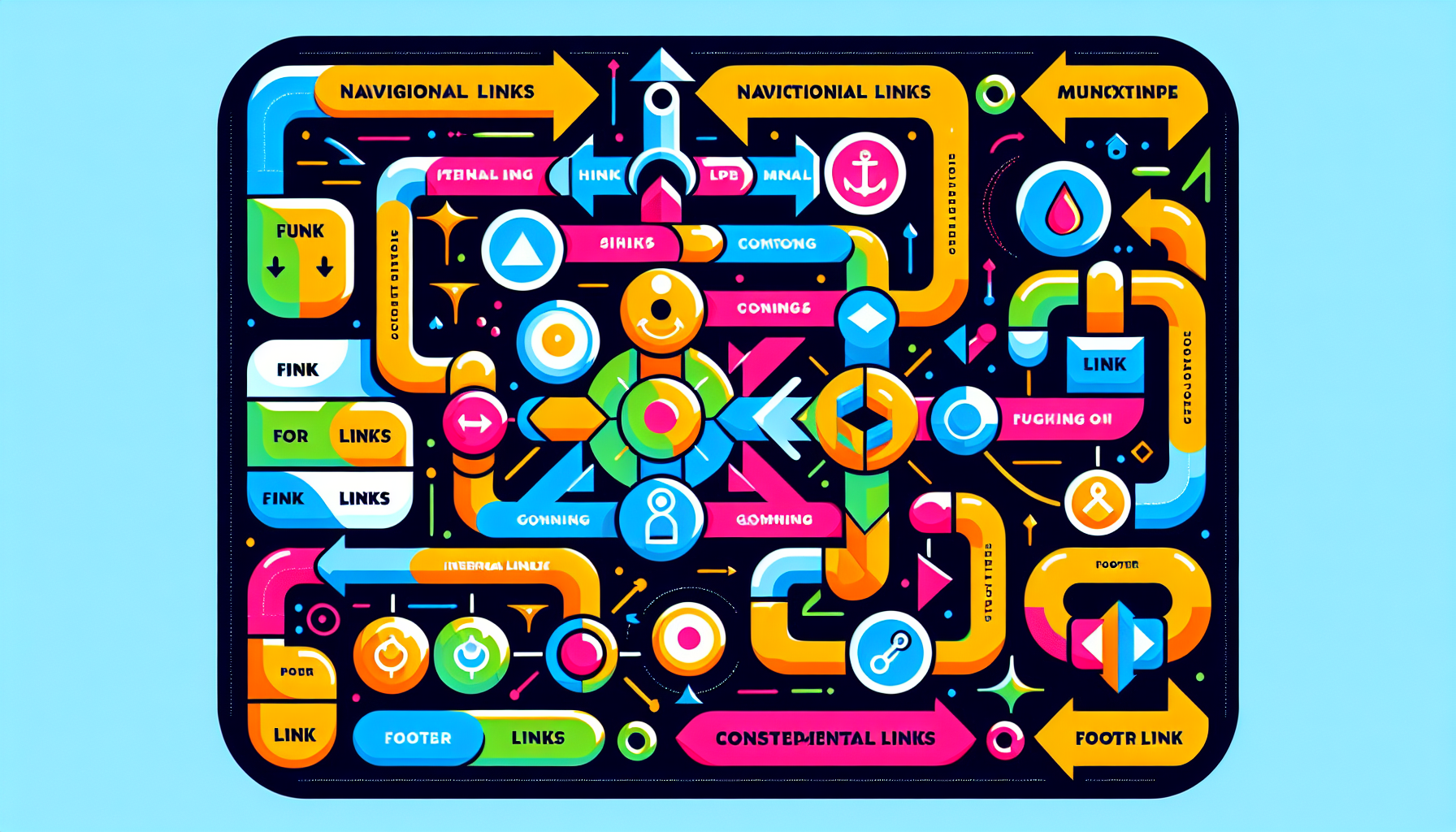
Various types of internal links play distinct roles within the architecture of your website, including navigational links, contextual links, as well as those found in sidebars and footers. Each type enhances both user experience and SEO in different ways.
Grasping the functions of these categories is critical for devising a solid internal linking strategy that supports your site’s framework.
Navigational Links
Navigational links serve as the backbone of your website’s layout, often found within the main menu, footer, or sidebar areas. They are essential for directing users to the primary sections of your site which can include product categories, services, or central themes.
Specifically speaking about sidebar links, they provide a means for users to effectively explore content that is not necessarily targeted while also improving their experience on your site.
Contextual Links
Embedded within your content’s text, contextual links lead users to connected articles or pages that augment their reading journey. These links are vital for enriching the context and relevance of your content, benefiting both users and search engines alike.
Footer and Sidebar Links
Providing access to key sections and related content, sidebar links are instrumental in offering quick navigation, which significantly enhances the overall user experience.
Conversely, footer links serve as an essential navigational tool throughout your website by granting entry to important yet lesser-visited relevant pages alongside pertinent links.
How to Develop an Effective Internal Linking Strategy

Optimizing anchor text, identifying pivotal content, and developing topic clusters are crucial components of an effective internal linking strategy. These actions can strengthen your website’s architecture, improve navigation for users, and elevate SEO results.
Identify Key Content
For an effective internal linking strategy, pinpointing your cornerstone content is crucial. These could be articles that are foundational in nature, blog posts with stellar performance, or pages with high rates of conversion. They act as pivotal nodes within your site’s structure, connecting to pertinent related content.
When you implement strategic internal linking toward these significant pages, it ensures a greater distribution of link equity while signaling to Google which pieces of content hold the most value on your site.
Create Topic Clusters
Groups of related content known as topic clusters bolster a central pillar page, greatly enhancing topical relevance. By linking high-value pages from those with established authority, you can boost their potential to rank higher and improve the effectiveness of your internal linking strategy significantly.
Optimize Anchor Text
It’s essential to employ anchor text that is rich in relevant keywords and descriptive when optimizing internal links. Such a technique not only improves the efficiency of your internal linking by providing an accurate description of the content on the linked page, but it also assists both users and search engines in grasping the context.
To ensure your internal linking strategy remains natural and effective, steer clear of excessive optimization or cramming too many keywords into your anchor text.
Best Practices for Internal Linking
Concentrating on crucial content, the configuration of link architecture, and facilitating user navigation is critical in optimizing your internal linking strategy’s efficiency. By adopting best practices for internal links, you can significantly enhance both SEO results and the overall user experience.
Use Descriptive Anchor Text
Using descriptive anchor text is crucial since it aids Google in understanding the context and significance of internal links. By embedding pertinent details within the anchor text, you enhance user experience by making clear what content awaits behind a link.
Eschewing ambiguous terms such as “click here,” and instead ensuring your anchor text precisely reflects the subject of the page to which you’re linking, not only boosts SEO results but also facilitates better navigation for users.
Maintain a Balanced Link Distribution
It’s essential to ensure a balanced distribution of internal links throughout your website, which helps avoid the over-optimization of certain pages. By adding internal links from existing posts to newer ones, you can uphold a robust internal linking strategy and guarantee that all key pages are allocated an appropriate share of internal links.
Regularly Monitor and Fix Broken Links
The presence of broken internal links can have a detrimental effect on both SEO outcomes and the experience users have. This often arises when pages are removed or their URLs are altered without setting up appropriate redirects.
By consistently conducting maintenance to detect and fix these broken links, you maintain your site’s integrity and promote positive user interaction.
Tools for Managing Internal Links
Efficient management of internal links is crucial for sustaining a robust internal linking structure, which can be greatly facilitated through the use of tools and plugins. These aids make it simpler to enhance your website’s SEO by adding internal links effectively.
Internal Link Analysis Tools
There are several instruments available that can scrutinize your internal linking structure, pinpointing potential enhancements. Tools such as the Semrush Site Audit tool have capabilities for detecting pages on your site that contain a singular internal link and facilitate initiating an internal link audit. Meanwhile, Semrush’s Backlink Analytics feature is capable of determining which of your pages hold the most authority.
For those aiming to refine their internal linking strategy, tools like Frase and Link Whisper come in handy by providing recommendations for internal links rooted in keyword analysis, thereby simplifying the process of optimization within this context.
Plugins for Automated Linking
Content managers can streamline their workflow and enhance SEO performance by using plugins like LinkJuicer and All in One SEO, which automate internal linking. By providing recommendations for links based on keywords specified by the user, these tools facilitate a more efficient approach to internal linking, thus saving time and effort.
Common Internal Linking Mistakes to Avoid
Common errors in internal linking, such as cramming too many links, choosing unrelated anchor text, and overlooking orphan pages, can detrimentally affect your site’s search engine optimization (SEO) endeavors and the overall user experience.
Overusing Nofollow Links
Utilizing an excessive amount of nofollow links can be detrimental as it instructs search engines to disregard the endorsement of the linked page, which may reduce the SEO potential of important pages by causing a devaluation in link equity. While there are situations where nofollow links are beneficial, their overuse should be avoided.
Using Generic Anchor Text
Employing nondescript anchor text such as ‘click here’ does not offer clarity for users and search engines, negatively affecting both SEO and the user experience. By varying anchor text and incorporating descriptive words, one can enhance alignment with what users are seeking and boost relevance within search engine results.
Ignoring Orphan Pages
Addressing orphan pages, which are not linked to other content and thus can be challenging for search engines to find and index, is crucial. By establishing internal links pointing to these pages, you ensure that they become visible both to search engines and users, enhancing the SEO performance of your website as a whole.
Auditing Your Internal Links
Conducting periodic audits of your internal links is essential to sustain an efficient internal linking strategy. Such an audit facilitates comprehension of the prevailing structure and recognition of opportunities for enhancement in your approach to internal linking.
Setting Audit Goals
Establishing precise goals for your internal link audit allows you to concentrate on the particular enhancements necessary to refine your internal linking strategy.
Employ a range of auditing tools to evaluate your existing structure of internal links and pinpoint opportunities for optimization.
Using Audit Tools
Employing resources such as Screaming Frog, Google Analytics, and SEMrush can shed light on the crawl depth of your website and how links are dispersed across it. Conducting frequent audits is crucial to maintain an orderly internal linking structure, thereby enhancing your website’s SEO effectiveness for search engine crawlers.
Implementing Changes
Evaluating the efficacy of internal links can pinpoint which ones are performing well and which require adjustments. By modifying internal links to guide users towards a newly created page, as well as incorporating links to fresh posts within existing content, you can avoid leaving content orphaned while aiding search engines in the crawling and indexing process for new articles.
Summary
To sum up, wielding the power of internal linking can be a formidable aspect of your SEO toolkit. By grasping the various forms of internal links and crafting a robust internal linking strategy that adheres to established best practices, you stand to enhance both your website’s search engine rankings and the overall user experience.
Bear in mind that routine audits coupled with appropriate tools and plugins are crucial for efficient management of your internal links. Initiate these approaches promptly, and observe as they elevate your website’s authority as well as its position on search engine results pages. Contact us today!
Frequently Asked Questions
What are internal links?
Internal links are essential for enhancing navigation and SEO by connecting different pages within the same website, which improves user experience and search engine visibility.
Why are internal links important for SEO?
Internal linking is vital for search engine optimization because it aids in the discovery and indexing of your content by search engines. It also plays an essential role in distributing link equity across pages, thereby boosting their authority.
Enhancing your website’s internal linking architecture can lead to better visibility and effectiveness within search results, ultimately optimizing your site’s performance.
What is the difference between navigational and contextual links?
Contextual links are integrated within the content to lead users to pertinent information, in contrast to navigational links which steer users through the architecture of a website and are commonly found in menus or sidebars.
Grasping this differentiation is key for improving user experience and the overall usability of a website.
How often should I audit my internal links?
It is advisable to conduct an audit of your internal links roughly on a monthly basis in order to preserve a robust linking architecture within your website.
Performing these periodic evaluations can pinpoint problems and enhance the overall functionality of your site.
What tools can I use to manage my internal links?
Utilizing tools such as Semrush, Screaming Frog, Google Analytics, along with plugins like LinkJuicer and All in One SEO can significantly enhance the management of your internal links.
With their assistance, you’ll be able to refine your strategy for internal linking effectively.