
How updating old content can significantly boost SEO often boils down to keeping your information relevant and engaging for users and search engines. Refreshing outdated posts improves your search rankings and increases organic traffic. In this article, you’ll learn practical strategies to update your content effectively.
Key Takeaways
- Updating old content boosts SEO and increases organic traffic by keeping your website relevant and authoritative.
- Conduct regular audits and fresh keyword research to identify which posts to refresh for maximum impact.
- Enhance user engagement by incorporating multimedia elements and improving readability, while also promoting updated content across platforms.
The Importance of Updating Old Content for SEO
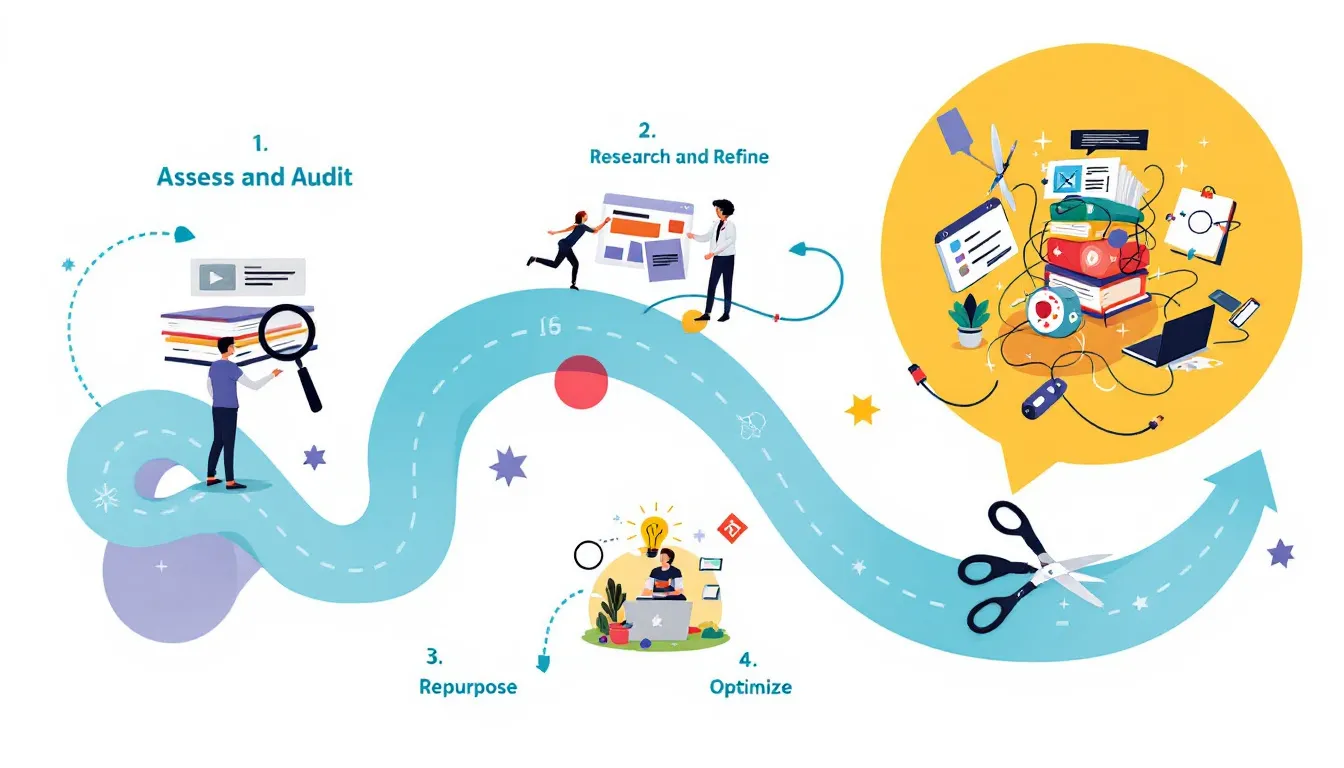
Updating old content is highly beneficial. Search engines favor websites that consistently refresh their content, leading to higher visibility in search results. Refreshing older blog posts can significantly enhance your search engine rankings and boost organic traffic.
Keeping your content relevant helps establish authority in your niche. Up-to-date blog content aligns with current trends and search intent, retaining your existing audience and attracting new readers seeking fresh information.
Failing to update old blog posts can result in lost traffic and engagement. Outdated content can negatively impact your search engine rankings. Regular updates are crucial for maintaining and enhancing overall SEO performance.
Identifying Which Blog Posts to Update
Begin by identifying which blog posts need a refresh. Analyze performance metrics like impressions, clicks, and average position to locate underperforming posts. Tools like Google Search Console offer valuable insights into blog performance and areas for improvement.
Focus on posts nearing the first page of search results and those with potential for higher click-through rates. These posts are ideal for updates, as minor tweaks can significantly boost their performance.
Perform quarterly content audits to keep your posts relevant and valuable. This practice helps identify older blog posts needing updates and ensures alignment with current SEO best practices.
Conduct Fresh Keyword Research
Conduct fresh keyword research to optimize your content for user search behaviors and improve organic traffic. Understanding search intent influences how your content should be structured and targeted. Your keyword strategy should reflect current trends and audience search queries.
Use tools like Ubersuggest to discover long-tail keyword suggestions that enhance SEO effectiveness. Long-tail keywords often yield higher conversion rates due to their specificity, attracting more targeted traffic and improving search engine results and search engine rankings.
Keyword research is an ongoing task. Regularly conducting fresh keyword research keeps your content relevant and continues to drive organic traffic over time.
Optimize Titles and Meta Descriptions

Titles and meta descriptions significantly influence how search engines and users perceive your content, impacting site performance. Craft concise, compelling SEO meta titles under 55 characters for full visibility. Start the meta title with the primary keyword to help search engines and users understand the content.
Effective meta descriptions, around 155 characters, should clearly convey the page’s value proposition. Eye-catching meta descriptions can significantly improve click-through rates. Include the main keyword in the meta description and ensure alignment with user search intent.
A click-through rate below 2% indicates that your title tags and meta descriptions may need rewriting. Updating these elements can enhance SEO performance and attract more organic traffic.
Refreshing On-Page SEO Elements
Refreshing on-page SEO elements helps maintain a page’s ranking and ensures content freshness. Update headers, subheaders, and alt text to improve search visibility. Ensure titles and meta descriptions are up-to-date and optimized for better SEO performance.
Review search intent while updating keywords to keep your content relevant. Naturally incorporating new keywords can boost page relevance and search results page and search engines rank. Properly sized images and videos enhance website loading speed, improving overall user experience.
Reformatting an old blog article by adding keyword definitions, numbered lists, and using headings/subheadings can significantly improve readability and engagement. These updates enhance SEO and make your content more enjoyable and easier to navigate.
Revamping Content Quality and Relevance
Revamping existing content quality and relevance keeps your audience engaged and improves SEO performance. Remove outdated sources or facts and add new insights and current information to transform outdated content and attract more readers.
Two critical aspects of revamping content quality are adding new information and statistics, and enhancing readability and engagement.
Adding New Information and Statistics
Incorporating the latest research and statistics into your blog updates enhances content authority and relevance. Fresh industry research ensures that updates reflect current trends and insights, improving search engine rankings and providing more value to your readers.
New data can significantly increase your content’s credibility and attract more traffic. Updating old posts with new information and statistics transforms them into powerful resources that readers trust and return to for reliable information.
Enhancing Readability and Engagement
Improving readability makes your content more enjoyable and easier to grasp, increasing reader engagement and comprehension. Incorporate bullet points, subheadings, and improve formatting to help readers quickly find what they need and make your content more accessible.
Overly technical or boring content can drive readers away. Cleaning up such content and making it more engaging is crucial. Writers should be mindful of their target audience to create content that resonates effectively and maintains interest.
Focusing on readability and engagement keeps your audience engaged longer, encouraging them to explore more of your content and leading to better overall SEO performance.
Improving Internal and External Links
Improving internal and external links is crucial when updating your content. Outdated links can harm your SEO and user experience, impacting site credibility. Evaluating and updating these links enhances search engine rankings and user engagement.
We will explore how to fix broken links and update your internal linking strategy.
Fixing Broken Links
Broken links can significantly impair user experience and diminish site credibility. Ensuring all internal and external links in your old blog posts still work is crucial. Tools like Screaming Frog can help identify broken links by entering the URL, conducting a crawl, and filtering by ‘Client Error (4xx)’.
After identifying broken links, review the list of URLs and either replace or remove them accordingly. Repairing or redirecting broken links ensures a seamless user experience and better SEO performance.
Maintain link integrity by avoiding changes to the link address when updating old blog posts.
Updating Internal Linking Strategy
Refining your internal linking strategy can improve user engagement by keeping visitors on your site longer. Use Google Search Console to find keywords for the page and identify relevant anchor text for internal links. This helps search engines understand page connections and share link equity across your website.
Updating pillar content is important for SEO as it informs search engines about the blog’s focus. Use advanced URL operators in Google to find authoritative pages on your site for linking.
Building internal links while updating your content enhances discoverability and improves overall SEO performance.
Incorporating Multimedia Elements
Multimedia elements like images and videos significantly enhance the visual appeal and user engagement of your blog posts. They provide an interactive experience, breaking up text and keeping readers engaged. Embedding videos related to your content can further enhance engagement and provide valuable information.
Infographics simplify complex topics and enhance user understanding. High-quality, relevant images contribute to better content structure and appeal. Optimize images by compressing files, using meaningful filenames, and adding relevant alt text to improve SEO and user experience.
Adding images and videos to old blog posts enhances user experience and increases SEO opportunities. Interactive multimedia elements make your content more appealing and keep readers on your site longer.
Republishing Updated Content
Republishing updated content with a new date significantly increases its visibility and trust among readers. This practice signals to search engines and users that the content is up-to-date and relevant. Ensure the URL remains the same to retain page authority and minimize confusion.
Use Google Search Console to request indexing of the updated post, ensuring search engines recognize the changes. This helps search engines quickly update their indexes with your refreshed content, improving search engine results page, search engine rankings, and organic traffic.
Tracking performance metrics before and after republishing determines the impact of your updates. Monitoring these metrics provides insights into how changes affect user engagement and search visibility, allowing for further optimizations as needed.
Promoting Refreshed Content
Promoting your refreshed content is as important as updating it. Clarifying the significance of your updates during outreach improves audience engagement. Inform readers about what has changed and why. Engaging with influencers and bloggers can significantly enhance visibility.
Mentioning other sites or bloggers in your posts can incentivize them to share your updated content, increasing its reach. Scheduling multiple posts on social media is an effective strategy for promoting refreshed content. Consistently sharing updates maintains a steady flow of traffic to your site.
Using social media to share content is a powerful way to promote refreshed posts. Highlight the relevance of the updated content and clearly state the updates during outreach to maximize engagement.
Summary
Updating old content is a powerful strategy to boost SEO performance. By identifying which blog posts to update, conducting fresh keyword research, optimizing titles and meta descriptions, refreshing on-page SEO elements, and revamping content quality, you can significantly enhance user engagement and search engine rankings. Incorporating multimedia elements, republishing updated content, and promoting it effectively are crucial steps to ensure your content reaches its maximum potential. Take these steps to transform your outdated content into valuable, relevant resources that attract more readers and drive organic traffic.
Frequently Asked Questions
Why is it important to update old content for SEO?
Updating old content is crucial for improving your SEO because it aligns your materials with current trends and search intent, ultimately boosting your rankings and engaging your audience. Keep your content fresh, and watch your visibility soar!
How do I identify which blog posts need updating?
To identify which blog posts need updating, analyze performance metrics such as impressions, clicks, and average position using Google Search Console. This will help you focus on posts that can be improved for better engagement and visibility!
What are the benefits of conducting fresh keyword research?
Conducting fresh keyword research significantly boosts your content’s relevance, driving more organic traffic and improving search engine rankings. Embrace this practice to ensure you’re always meeting user needs and staying ahead of the competition!
How can I optimize titles and meta descriptions for better SEO?
To optimize titles and meta descriptions for better SEO, focus on crafting concise and compelling content that includes your primary keywords. This approach will enhance your click-through rates and improve your search engine rankings!
Why should I incorporate multimedia elements into my content?
Incorporating multimedia elements into your content is essential because they significantly enhance user engagement and improve readability. By integrating images and videos, you’ll also boost your SEO opportunities, making your content more discoverable!